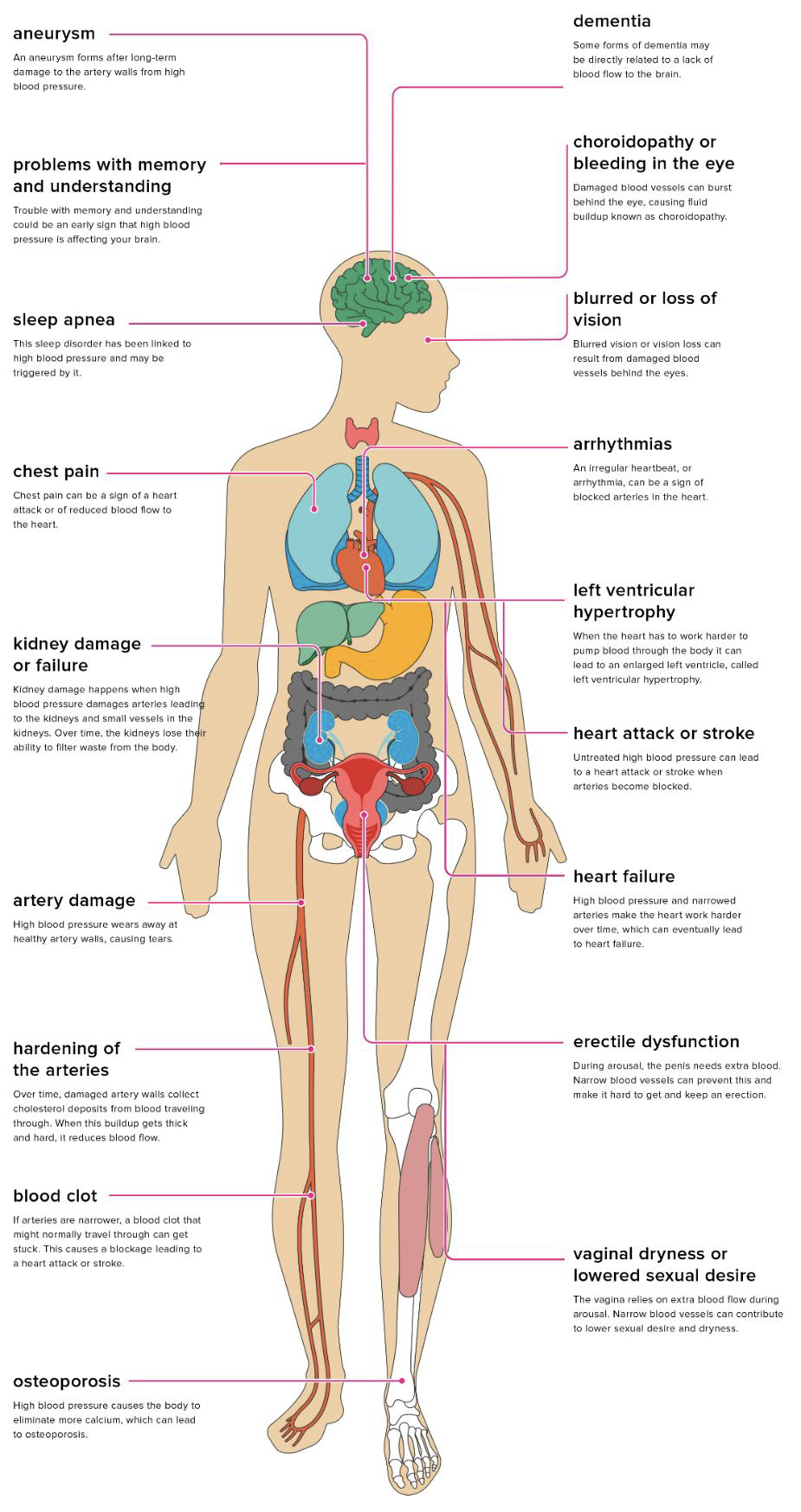
EFFECT OF HYPERTENSION ON YOUR BODY
What happens to your Heart & Circulation? Your blood vessels function to provide oxygen and nutrient supply to all your vital organs. Blood pressure tends to increase gradually over time and if you remain undiagnosed the more the serious your health outcomes will get. When blood pressure increases, with time it will start to damage the vessel walls. When this happens, cholesterol deposits flowing through the blood vessels will attach itself to these tears. After prolonged deposition these cholesterol deposits form plaques which builds up within the walls causing narrowing of these vessels and limiting blood flow to your vital organs.
Prolonged narrowing and further increase in deposits will lead to a completely clogged up vessel which stops the blood flow from reaching to vital organs (Heart, Kidney, Brain). In your heart for example, when blood flow is stopped it will cause symptoms or even lead to a heart attack.
Symptoms that you will start to notice will be
  1. Crushing or Stabbing chest Pain
  2. Profuse sweating
  3. Intermittent chest pain on rest or during physical activity
  4. Shortness of breath
This narrowing will put extra pressure on your heart to work harder but will be less effective in terms of output due to the blocked arteries and high blood pressure. Eventually, as a compensatory mechanism, the extra work can lead to the enlargement of your heart ventricle (Left Ventricle), which is the part your heart that pumps blood to the rest of the body. This enlargement will also put you in the risk of getting a heart attack. Prolonged enlargement and increased workload of the heart will eventually lead to heart failure.
Heart failure is when your heart becomes so weak and damaged from high blood pressure, working hard, or a previous heart attack, that it stops being able to pump blood through your body effectively.
What you will need to look out for possible heart failure:
  • You will have difficulty breathing and shortness of breath
  • You will have trouble breathing especially when you are lying flat
  • You will notice swelling over your feet, legs and even your abdomen
  • You will feel lethargic and tired
Besides this, high blood pressure levels can also cause bulges or “swellings” to form within the damaged vessels known as an aneurysm which can occur anywhere in your body. These “swellings” tends to increases in size gradually and will only noticed when it starts to cause pain or even rupture resulting in life-threatening conditions which can be fatal. What happens to your Nerves and Vision? The same damage that high blood pressure causes to the heart can happen to the brain. When larger vessels in the brain are blocked and blood flow is stopped from reaching the brain, this will result in a condition called stroke. When this happens, cells or the areas of the brain that are unable to get oxygen and nutrient supply will be begin to die. Your survival rate and likelihood of permanent brain damage depends on how severe the stroke is and how fast you receive treatment. Besides this high blood pressure also may play a role in your cognitive abilities causing conditions known as dementia. Narrowing of vessels and reduced blood flow to the brain cells will lead to problems in your memory and thinking (cognitive). What you will need to look out for possible early signs of cognitive dysfunction:
  • You may have trouble remembering things that happened recently
  • You will easily lose focus during conversations
The same damage can happen to the blood vessels in your eyes. Narrowing and clogging of vessel will lead to vessels bursting and bleeding causing vision problems. When this happens, you will notice symptoms like blurring of vision or in severe cases total loss of vision. What happens to your Bones? High blood pressure can lead to high level of calcium loss from the body when you urinate. This is a condition called osteopetrosis in which it will cause your bones to get weaker and more vulnerable to fractures. cause bone loss by increasing the amount of calcium your body gets rid of when you urinate. Menopause women are especially at high risk of developing osteoporosis.

What happens to your Lungs and Breathing? The same damage can happen to the blood vessels in your lungs when vessels that carry blood to the lungs get blocked. This is a serious life-threatening condition called pulmonary embolism. Besides this a lot of research has linked the condition called sleep apnoea to high blood pressure, due to the high prevalence of hypertension in patients diagnosed with sleep apnoea. This is a disorder that causes loud snoring and breathing interruptions during your sleep at night leading to you not feeling rested when you wake up in the morning.

What happens to your Fertility? For arousal to happen your sexual organs will require an extra amount blood flow. However, hypertension leads to narrowing and blockage of vessels leading to the penis and vagina. When this happens, you may experience symptoms of sexual dysfunction.
What you will need to look out for possible early signs of sexual dysfunction:
  • Erectile Dysfunction (Problem maintaining or getting an erection)
  • Reduced arousal / libido
  • Problems getting an orgasm
  • Vaginal Dryness
What happens to your Kidney? The same damage can happen to the blood vessels leading to your kidneys and the smaller vessels inside your kidneys. Prolonged damage will affect your kidney’s ability to filter waste and toxins from your body leading to an accumulation of waste products within you and kidney failure. When your kidneys are no longer able to remove waste products from your body, you will need to undergo dialysis or a kidney transplant. What you will need to look out for possible early signs of kidney dysfunction:
  • Do you notice any blood in your urine lately?
  • Do you notice any swelling over your feet or legs?