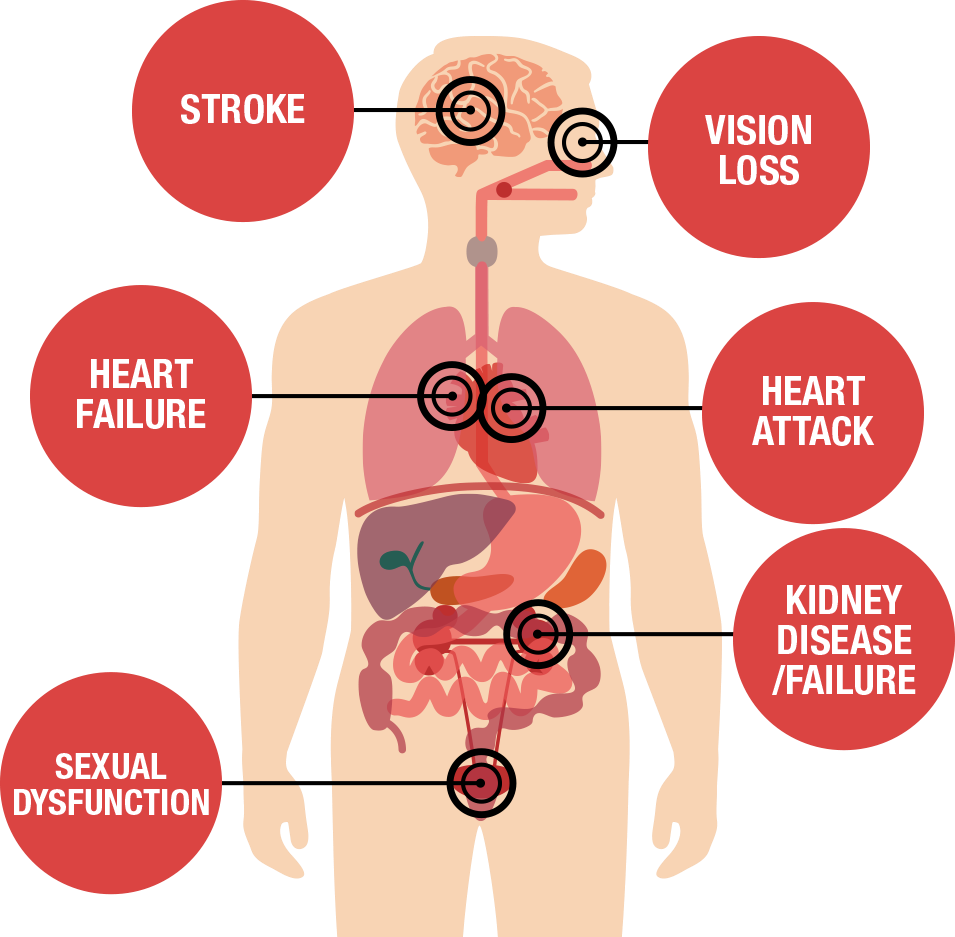
Blood pressure is a measure of the amount of blood pumped by the heart with the amount of resistance to the flow of blood within the arteries. Blood that pumps through narrow or clogged arteries will result having higher blood pressure values. The readings are given in two different numbers.
- Top number (Above): This is the systolic pressure which is the pressure within your arteries when your heart beats.
- Bottom number (Below): This is the diastolic pressure which pressure within your arteries in between each heart beat.
- Chronic Kidney Diseases
- Thyroid Diseases
- Certain medications, such as birth control pills, cold remedies, decongestants, over-the-counter pain relievers and some prescription drugs
- Drugs such as cocaine and amphetamines
KNOW YOUR RISK FACTORS! ➔ Aging - Your risk of high blood pressure will increase as you age. Men are likely to develop hypertension until the age of 64, where else woman tend to develop hypertension after the age of 65 and above. (Source: Healthline September 23;2017) ➔ Family history of Hypertension - High blood pressure is a condition that can be seen in different family generations ➔ Smoking & Consuming Tobacco - Chemicals contained in tobacco can lead to the damage of your arterial wall linings. These damages will cause your arteries to further narrow and put you in greater risk of developing heart diseases. Please also take note that passive smoking can also increase your risk of developing heart diseases ➔ Consuming a High SALT Diet - Consuming high amounts of salt will cause your body to retain more fluid which will further increase your blood pressure. ➔ Obesity / Being Overweight - When you are overweight, your body will require a higher amount of blood to supply oxygen and nutrients to your organs. When this happens, the increase in blood flow will also lead to an increase in pressure against the walls of your arteries. ➔ Being Physically Inactive - When you are physically inactive, you heart tends to beat faster. When this happens, your heart tends to work stronger with each contraction leading to a higher force against your arteries. Besides this, the lack of physical activity will also increase your risk of being overweight. ➔ Consuming a LOW POTTASIUM Diet - A balanced amount of potassium is essential to help balance the amount of sodium in your body. When your blood potassium levels are low due to diet, or other health conditions, this will cause a buildup of sodium in your blood. ➔ Poor STRESS Management - High levels of stress can lead stress-related habits such as eating more, smoking or drinking alcohol which will eventually lead to a further increase in blood pressure. Ensure to manage your stress well and have good coping techniques to rely on to get you through the day. ➔ Drinking too much alcohol - High alcohol consumption can damage your heart ➔ Pre-Existing Chronic illness - Chronic illness such as diabetes, hyperlipidemia, sleep apnea and chronic kidney disease can increase your risk of developing hypertension.