WHAT DO YOU NEED TO LOOK OUT FOR?
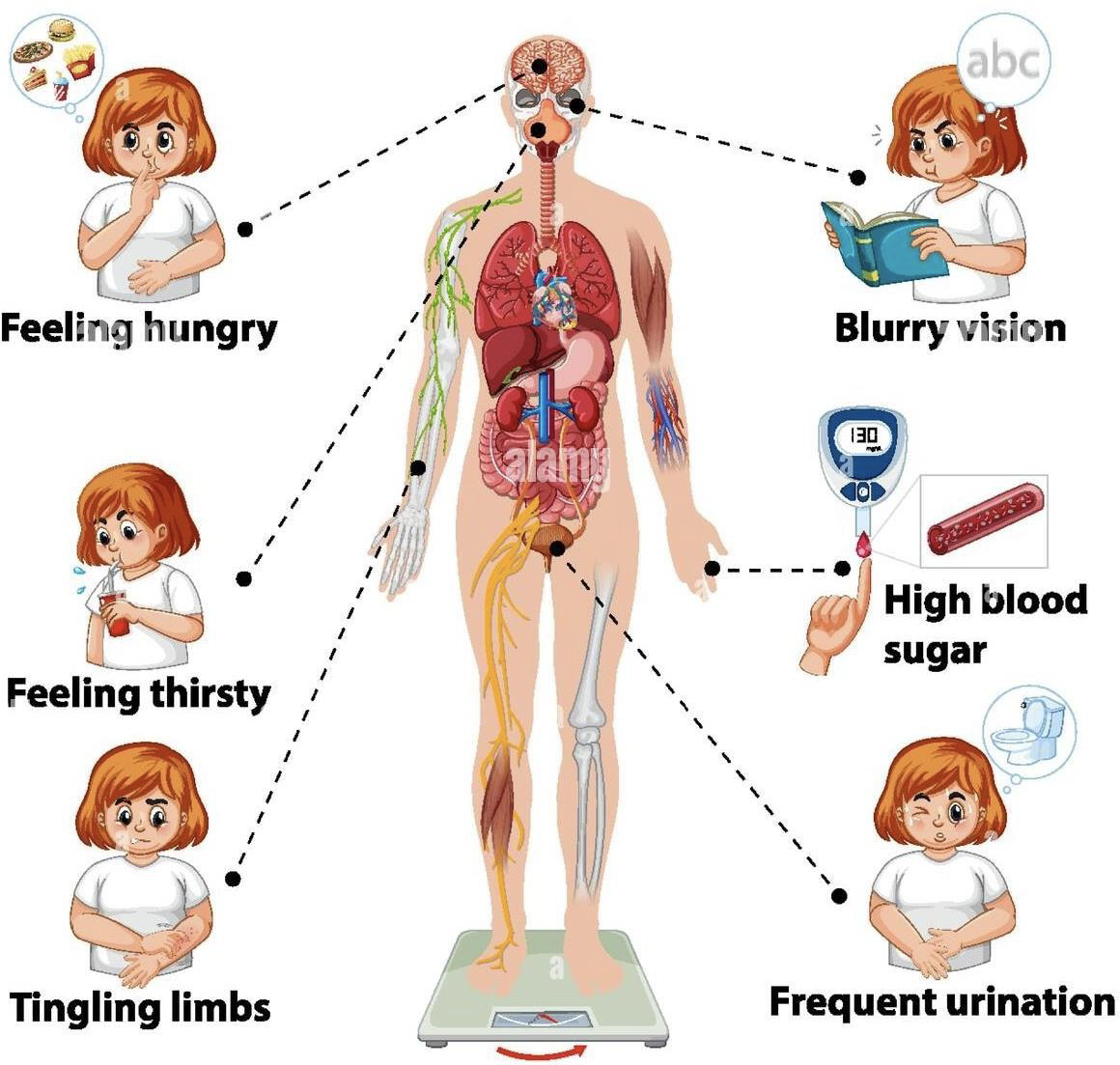
- Are you feeling extremely thirsty / hungry these days?
- Are you peeing very frequently; (especially at night?
- Do you have any Cuts / Wounds that are healing very slowly? (Pleasecheck over the heal / sole of the foot)
- Any blurred visions?
- Do you have any sudden loss of weight?
- Do you experience extreme tiredness?
- Do you experience any itching around your vagina / penis? (More Frequent than usual)
Excessive urination is termed Polyuria. This usually happens when your kidneys are unable to filter out the extra glucose within your blood. When this happens, the extra glucose which ends up in the urine will draw in more water (Osmotic effect) leading to more frequent urination. Adults naturally produce 1 to 2 litres of urine per day. Polyuria is defined as more than 3 litres per day.
Excessive thirst is termed polydipsia which is usually a result of frequent urination (polyuria). Polyuria causes you to lose a lot of fluids and polydipsia is your body urge to replace the lost fluids by making you feel thirsty. Extreme thirst in polyuria is always persistent, no matter how often you replenish.
Excessive hunger is termed polyphagia. This usually happens in diabetes due to your body difficulty in turning glucose into energy. Lack of energy will make you feel hungry and in diabetes, eating more sugar will not alleviate the hunger as all the sugar taken in cannot be processed.
The increased blood sugar from diabetes can damage blood vessels by causing them to get swollen and start leaking. This results in blurry vision.
Fatigue can be a mental or physical tiredness that doesn’t improve with rest. This in particular is a difficult symptom to research, but a 2016 study concluded that people with type 2 diabetes may experience fatigue as a result of fluctuations between high and low glucose levels and low energy levels.
If you have type 2 diabetes, regular cuts and scratches can take longer to heal. Wounds on your feet are common and easy to overlook due to your reduced sensation to pain. In addition to this slow healing foot ulcers occur due to poor blood supply as well as damage to the nerves responsible for blood flow to the feet.
High glucose can damage the blood vessels that supply nutrients to your nerves. When your nerves don’t receive enough oxygen and nutrients, they cannot function properly. This is called diabetic neuropathy and is most common in your extremities (Hands and Legs).
Your body’s resistance to insulin causes glucose (sugar) to build up in the bloodstream instead of being turned into energy. When energy levels are constantly depleted this causes your body to consume other energy sources, like muscle or fat tissue causing you to lose weight.
Having poor blood circulation and more sugar in your blood and tissues is an
energy source for infections to grow allowing them to spread faster and more
frequently within you.
Some common infections to take note of include:
- Infections in the ear, nose, and throat
- Frequent Kidney infections (Pyelonephritis)
- Infection over your feet (Ulceration due to slow healing wounds)
One of the common symptoms in diabetes appears as a skin condition called Acanthosis nigricans. This condition forms dark bands of skin in the body folds such as your armpits, neck, and groin that has a velvety texture.
- Men with diabetes have lower levels of testosterone, which a 2016 study which linked to a decreased sex drive
- A review of research published in 2017 found that more than half of men with diabetes are affected by Erectile Dysfunction
- Some men may experience retrograde ejaculation as a symptom of diabetes, according to research
- The lower testosterone levels observed in men with diabetes may also contribute to reduced muscle mass.
- Urinary Tract Infections are more common in women and are more common and severe in those with type 2 diabetes, according to a review of research published in 2015
- Elevated glucose levels allow yeast organisms to grow more easily, leading to a higher chance of infection.
- Type 2 diabetes does not specifically make it more difficult to conceive, but polycystic ovary syndrome (PCOS) can. Developing PCOS has been linked to insulin resistance, and PCOS has been shown to increase the risk of type 2 diabetes, according to the CDC.
Prediabetes is a health condition where your blood sugar is higher than it’s supposed to be, but it’s not high enough for a doctor to diagnose you with type 2 diabetes. There are usually no symptoms of prediabetes, but there are steps you can take to help prevent developing it:
- losing excess weight and maintaining a moderate weight
- exercising as often as possible
- adjusting your diet, focusing on nutrient-rich, balanced eating plan
- drinking water instead of low-nutrient beverages such sugary drinks