EFFECT OF DIABETES ON YOUR BODY
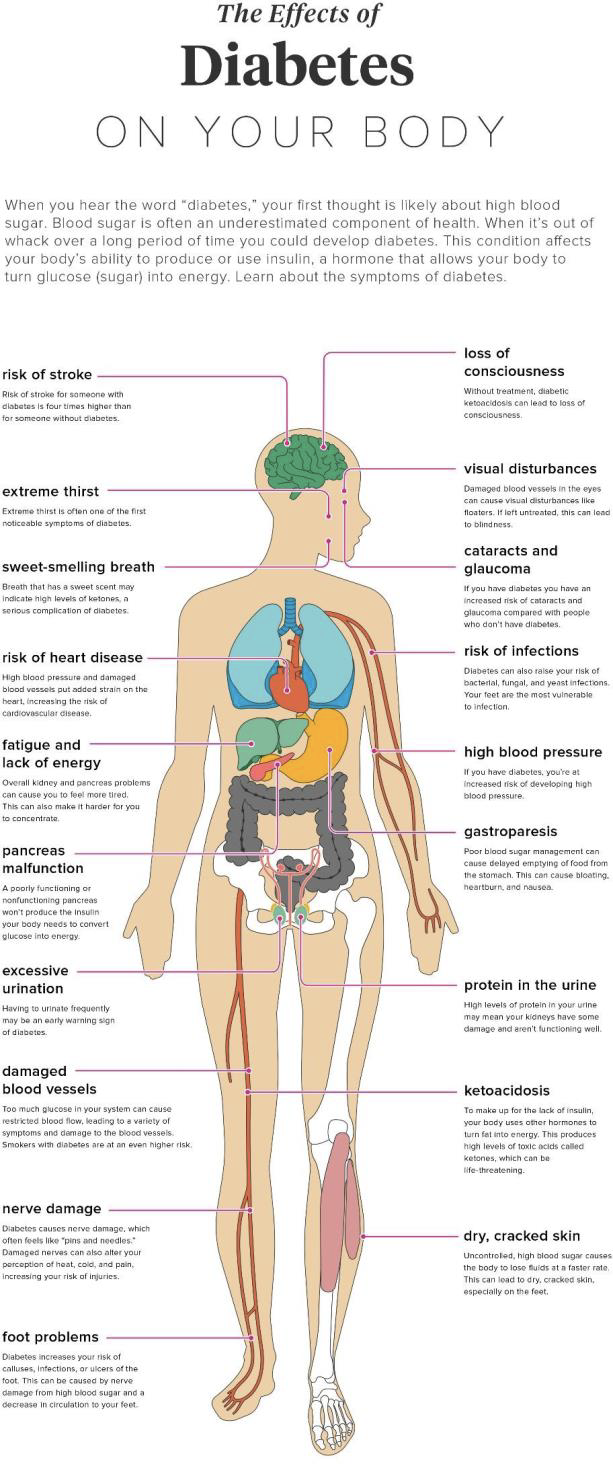
When your pancreas produces none or very little amounts of insulin or if your pancreas produces sufficient amounts of insulin but your body is unable to use it then other hormones are used to burn your body’s fat into energy. When this happens it will produce high levels of toxic chemicals, including acids and ketone bodies which leads to a serious condition called Ketoacidosis
What to look out for when you are probably having diabetic ketoacidosis include:
- You become extremely thirsty
- You will urinate very frequently
- You will feel extremely tired and fatigue
- Your breath will have a sweety smell due to the high amount of ketones in your blood
This is a very serious complication and if left untreated, you may have loss of consciousness or even death.
This is a condition that mainly occurs in type 2 diabetes and it involves very high levels of blood glucose levels but not ketones. This is a serious condition in which you may experience severe dehydration or loss of consciousness. HHS can also be caused by a heart attack, stroke, or infection. When your blood glucose levels increase to extremely high levels this will lead to a condition called Gastroparesis (a condition where the stomach is unable to completely empty). Due to this you may experience symptoms such as:
- You will feel nauseated or may start vomiting
- Your will experience a bloated feeling
- You will feel a burning sensation over your mid chest area (heartburn)
Having uncontrolled diabetes can put you in risk of kidney failure. This is because diabetes will damage and affect the ability of your kidneys to filter waste products from your blood. High levels of albumin or protein in your urine may be an early sign that your kidneys are not functioning normally. Kidney disease related to diabetes is called diabetic nephropathy. This is a condition that does not show symptoms earlier but will usually be noticed in later stages of prolonged uncontrolled diabetes.
For more information on diabetic nephropathy -> please visit our advanced section
High blood glucose levels will contribute to the formation of fatty deposits within the blood vessel walls. With time, these fatty deposits will narrow and eventually clog the vessel causing restriction to the blood flow within the vessel and reduced blood flow to vital organs in your body.
The Lack of Blood Flow
- This eventually affect your hands and feet, and cause pain while you’re walking. This is condition is called intermittent claudication. Besides this the poor blood flow will also increases your risk of developing infections or ulcers of the foot. Poor blood flow and nerve damage increases the likelihood of having your foot or leg amputated. Therefore, it is critical that you take good care of your feet and inspect them often
The Narrowing of Blood Vessels
- This will cause your feet to have reduced sensation will have reduced sensitivity to hot and cold temperatures. This condition is known as peripheral neuropathy, which is a type of diabetic neuropathy that causes decreased sensation in the extremities. This is particularly dangerous because it may prevent you from noticing an injury or infection.
Diabetes can also affect your skin by causing dehydration causing your skin to
appear dry and soles of the feet to crack. This dehydration is due to the lack of
moisture when blood sugar levels are high. These affected areas of the skin will
become susceptible to fungal, bacterial, or yeast infections.
Areas to check regularly? (Look out for any redness, blistering, and itchiness)
- In-between your fingers and toes
- Around your groin area
- Beneath your armpits
- At the corners of your mouth
You may also be more prone to:
- Folliculitis (infection of the hair follicles of the skin)
- Styes (boils at the base of your eye lid)
- fungal infection over your nail / nail beds
Uncontrolled diabetes can also lead to three skin conditions:
-
Eruptive xanthomatosis
- A hard yellow bump with a red ring
-
Digital sclerosis
- causes thick skin, most often on the hands or feet
-
Diabetic dermopathy
- Causes brown patches on the skin
Diabetes causes damage to your nerves which is a condition called diabetic neuropathy. This affects your perception of heat, cold, and pain. This condition makes you very susceptible to injury because you will not notice and treat injuries leading to more severe complications such as ulceration and infections
Diabetes can also lead to swollen, leaky blood vessels in your eye, called diabetic retinopathy which leads to initial blurring and damaged vision. If not treated this will lead to blindness. Therefore, it is very important to screen your vision regularly with your doctor if you have diabetes.
For more information on diabetic neuropathy and retinopathy → please visit our advanced section
The changing hormones during pregnancy can cause gestational diabetes. However, in most cases, gestational diabetes is easily managed, and glucose levels usually return to normal after the baby is born. Symptoms are similar to other types of diabetes but may also include repeated infections affecting the vagina and bladder.